
Laminate Flooring Thickness: Does It Really Matter for Your Home?
When shopping for laminate flooring, homeowners are often faced with a variety of thickness options, typically ranging from 6mm to 12mm or even 15mm. It is easy to assume that “thicker is always better,” but the reality is more nuanced: the thickness of a laminate plank is just one of several factors including its core density and wear layer rating that contribute to its overall quality and suitability for a specific area of the home. Understanding how the millimeter measurement relates to a plank’s durability, sound absorption, and feel underfoot is crucial for making an informed investment.
At Nampa Floors & Interiors, Inc., serving Boise and Nampa, ID, we help clients decode these specifications. While a 12mm plank offers advantages in sound and stability, a high-quality 8mm plank with a dense core and a high wear rating can outperform a cheaper, less dense 12mm product. Choosing the right thickness requires balancing your budget, the condition of your subfloor, and the traffic level of the room.
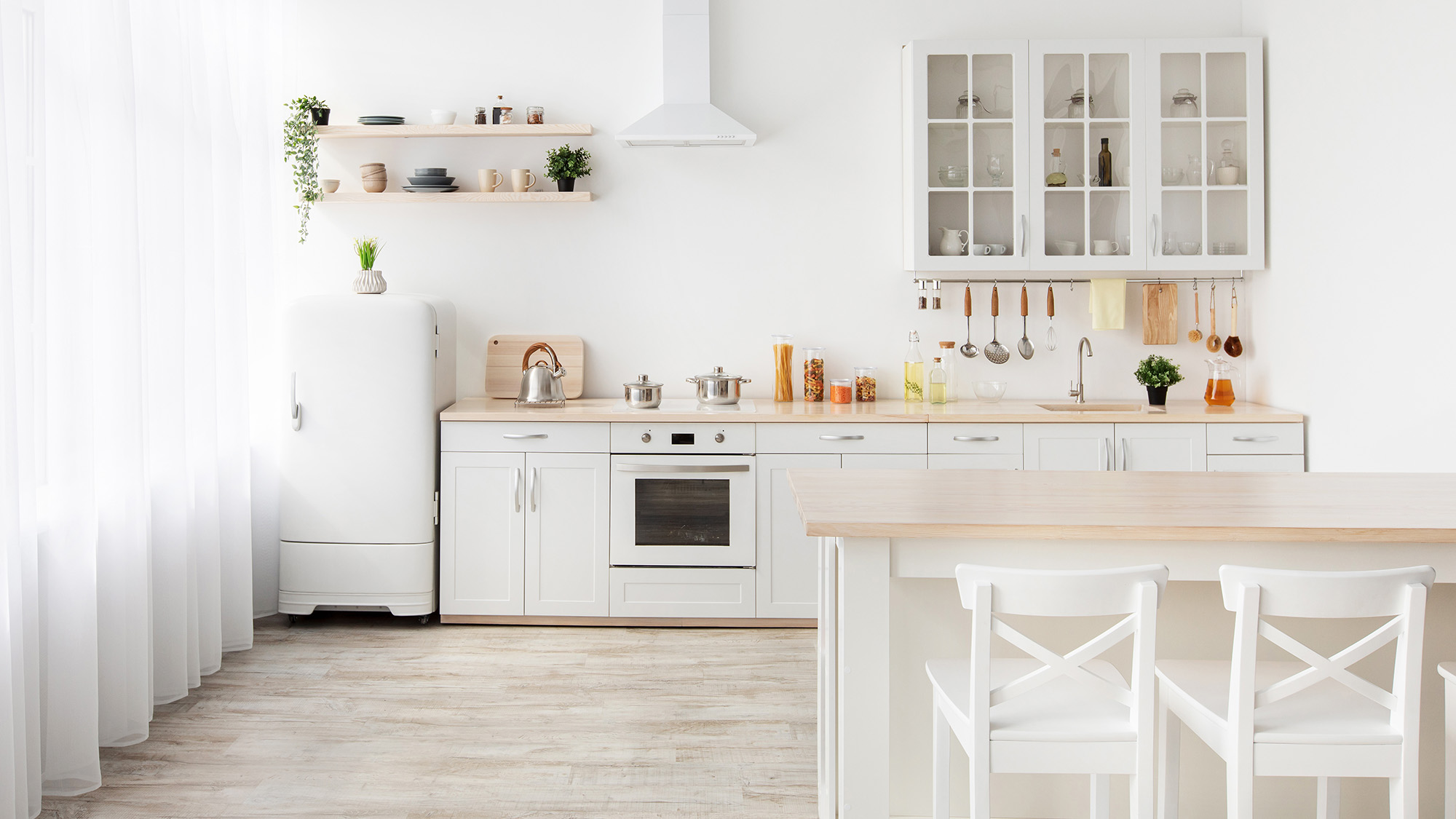
The Role of Thickness in Durability and Stability
Laminate thickness is primarily determined by the depth of its High-Density Fiberboard (HDF) core. This core is the structural heart of the plank.
Enhancing Stability and Reducing Subfloor Imperfections
- Increased Stability: Thicker planks are inherently more rigid and denser, which translates to superior dimensional stability. This rigidity makes the floor feel more solid underfoot and less likely to flex or bounce, providing a more premium feel, similar to hardwood.
- Subfloor Forgiveness: Thicker laminate is far more forgiving of minor imperfections in the subfloor. A 10mm or 12mm plank is stiff enough to bridge slight dips or high spots in the subfloor, whereas a thinner 6mm or 7mm plank will conform to those irregularities, often resulting in visible lippage or unevenness. For older homes in Nampa with less-than-perfect subfloors, choosing a thicker option can save significant time and money on subfloor preparation.
The Wear Layer vs. Core Thickness
It is essential to distinguish between the wear layer and the overall thickness. The thickness of the plank (the millimeters) does not determine the scratch resistance; that is determined by the AC (Abrasion Class) rating of the top wear layer. A high-quality 8mm plank with a strong AC4 rating will resist scratches better than a cheap 12mm plank with a low AC2 rating. Thickness provides stability, while the wear layer provides surface durability.
Sound-Dampening and Underfoot Feel
Thickness plays a critical, often underestimated, role in the acoustic quality and comfort of the installed floor.
Acoustic Benefits
Thicker laminate floors absorb more sound than thinner varieties. The denser HDF core and the extra airspace created by the thicker plank help to deaden the hollow, “clicky” sound often associated with low-quality or poorly installed laminate.
- Reduced Echo: This sound absorption is particularly important in large, open-concept spaces or on upper levels of a home, where noise transmission is a concern.
- Improved Underlayment Pairing: While a thicker plank helps, the overall quietness of a laminate floor is also highly dependent on the quality of the underlayment used beneath it. A premium acoustic underlayment should always be used, regardless of the plank’s thickness.
The Haptic Experience
The primary benefit most homeowners notice immediately is the feel underfoot. Thicker planks feel more substantial, solid, and warm, closely mimicking the feeling of solid wood flooring. This haptic experience alone often justifies the marginal increase in cost for a 10mm or 12mm product in main living areas or bedrooms.
Matching Thickness to Room and Budget
The choice of thickness should be strategic, matching the plank to the room’s function and the homeowner’s budget.
| Recommended Thickness | Ideal Location | Primary Benefit |
| 6mm – 7mm | Closets, Low-traffic storage, Rentals | Lowest cost; best for subfloors that are already perfectly level. |
| 8mm | Bedrooms, Dining Rooms, Medium Traffic | Excellent value; provides good stability and is the standard for most residential areas. |
| 10mm – 12mm+ | Main Living Areas, Hallways, Basements | Superior stability, best sound dampening, and necessary for less-than-perfect subfloors. |
Ultimately, thickness matters significantly for the long-term stability and feel of your floor, but quality measured by core density and AC rating is non-negotiable.
Choose Stability, Sound, and Quality
To understand the trade-offs between laminate thicknesses and choose the right option for your subfloor and budget, Contact us for a free in-home consultation or visit one of our flooring showroom locations, where our knowledgeable and experienced staff can help guide you as you choose your perfect flooring.